
The Beauty in Flexibility
Fern Carbonell | SEP 8, 2024
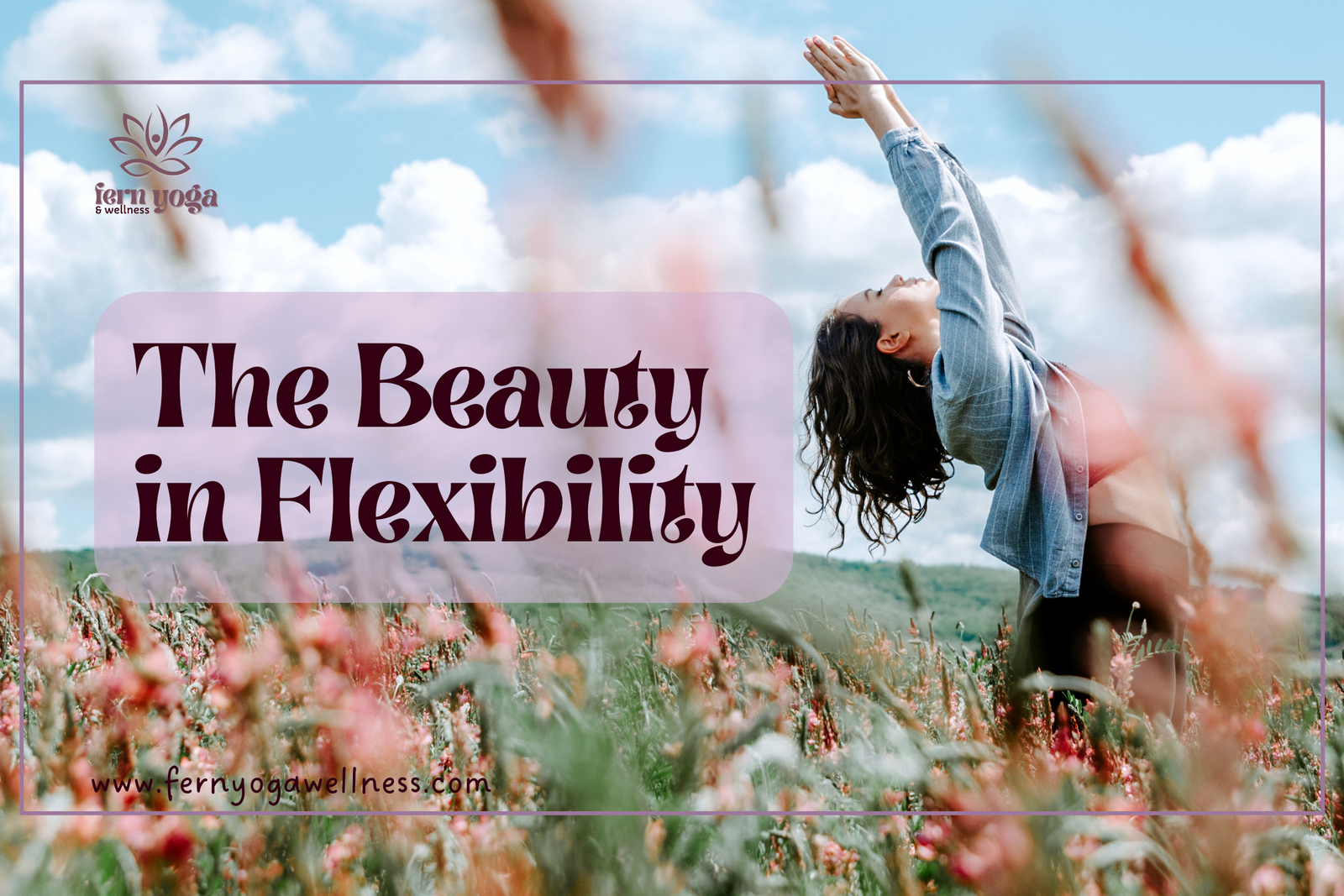
As we move through life, our bodies naturally begin to feel the effects of time. For us women over 50, staying flexible isn’t just about touching our toes or bending into a yoga pose. It's about maintaining or improving our mobility, reducing stiffness, and supporting overall health. Being able to move with the kind of ease and grace that lets us enjoy our lives fully—whether we’re playing with grandchildren, gardening, or simply reaching for something overhead or behind. One of the best ways to support flexibility as we age is through yoga.
The Beauty in Flexibility
Flexibility is like the unsung hero of our overall well-being, playing an essential role in how we move and feel daily. It helps us stay limber, reduces stiffness, and can even ease some of the aches and pains that sneak in as the years go by. When we talk about flexibility, we’re not just talking about our muscles—our joints, ligaments, and tendons all play a part in how we move and feel every day.
Yoga is a wonderful way to keep that flexibility alive and well. Unlike some forms of exercise that can feel hard on the body, yoga is gentle and adaptable. It meets us where we are, whether we’re new to the practice or seasoned pros, and it offers endless ways to stretch and strengthen.
Practicing yoga regularly helps keep our muscles and joints loose and limber, which can really help with those aches and pains that tend to show up as we get older. It gets us moving through our full range of motion and boosts circulation, which is great for staying flexible. And the best part? Yoga is gentle and easy to adapt, so it works for women of any age or fitness level.
Cultivating Ease in Our Body
Incorporating teachings from the Yoga Sutras can deepen our understanding of flexibility—not just in our bodies, but in our minds and spirits as well. One of the central concepts in the Yoga Sutras is sthira sukham asanam (Yoga Sutra 2.46), which translates to "the posture should be steady and comfortable."
This teaching reminds us that in yoga, we are not striving for extreme poses or pushing ourselves to the brink. Instead, we aim to find a balance between effort and ease, stability and softness. Flexibility in yoga, therefore, is not about forcing ourselves into positions, but about cultivating a sense of ease and grace in our movements and our minds.
Another key teaching is vairagya (non-attachment), found in Yoga Sutra 1.12. It encourages us to practice without being overly attached to the results. This is particularly relevant for those of us who might feel frustrated if our bodies don’t move the way they used to. Practicing vairagya helps us embrace our bodies as they are, celebrating the flexibility we have rather than lamenting what we might have lost.
My Go-To Poses for Flexibility
Here are a few of my favorite yoga poses that help keep my body feeling supple and strong. The beauty of these poses is that they’re simple yet effective, and they can be done at any time of the day.
Extended Mountain Pose w/backbend (Utthita Tadasana)
This variation to mountain pose is a wonderful stretch to do at your desk. The pose stretches the chest, rib cage, shoulders, upper abdomen, arms and neck deeper than Volcano Pose. The gentle backbend counters the sitting position releasing tension in the lower back. Keep the palms apart and open or clasp hands together with index fingers pointing up. This pose opens the heart and chest assisting with better breathing.
Cat-Cow Pose (Marjaryasana-Bitilasana)
This is a wonderful way to warm up the spine and get everything moving. Start on all fours with your wrists under your shoulders and knees under your hips. Inhale as you arch your back, lifting your tailbone and head (Cow Pose). Exhale as you round your spine, tucking your chin to your chest and your tailbone under (Cat Pose). Repeat this flow for a few breaths, feeling your spine gently stretch and release tension.
Seated Forward Bend (Paschimottanasana)
This pose is great for stretching the entire back of your body, from your calves to your spine. Sit on the floor with your legs extended straight in front of you. Inhale as you lengthen your spine, and exhale as you fold forward, reaching for your toes or shins. Don’t worry if you can’t reach very far—just go as far as feels comfortable, and breathe into the stretch.
Downward-Facing Dog (Adho Mukha Svanasana)
A classic for a reason, this pose stretches the hamstrings, calves, and shoulders while also strengthening the arms and legs. Start on all fours, then lift your hips towards the ceiling, straightening your legs as much as possible. Your body will form an upside-down "V" shape. Let your head hang freely between your arms, and focus on pressing your heels towards the floor.
Reclining Hand-to-Big-Toe Pose (Supta Padangusthasana)
This is a great pose for those of us who need a little extra help with flexibility in the hips and hamstrings. Lie on your back with your legs extended. Lift one leg towards the ceiling, keeping it straight, and either hold onto your big toe or loop a strap around your foot if you need some extra length. Gently pull your leg towards you, keeping both hips grounded. Repeat on the other side.
Triangle Pose (Trikonasana)
Triangle Pose is a wonderful way to stretch the sides of the body, hamstrings, and hips. Stand with your feet wide apart and turn one foot out 90 degrees. Extend your arms parallel to the floor. Reach your front hand forward and hinge at the hip to lower your hand to your shin, ankle, or the floor. Extend the opposite arm toward the sky, keeping both legs straight and strong. This pose helps improve balance while creating a deep stretch along the sides of your body.
Cobra Pose (Bhujangasana)
A gentle backbend that opens up the chest and stretches the spine, Cobra Pose is perfect for counteracting the effects of sitting for long periods. Lie on your stomach with your hands under your shoulders, elbows close to your body. Inhale as you press into your hands and lift your chest off the floor, keeping your lower ribs on the ground. Hold for a few breaths, then slowly lower back down.
Making Yoga a Part of Your Life
The best part about yoga is that it’s a practice—something we can come back to again and again, no matter where we are in life. It’s not about perfection or pushing ourselves to the limit. Instead, it’s about honoring our bodies, listening to what it needs, and giving ourselves the gift of movement and flexibility.
As we practice, we can also keep in mind the teachings of sthira sukham asanam—finding that balance of steadiness and ease in every pose—and vairagya—letting go of attachment to specific outcomes and simply enjoying the journey.
So, unroll your mat, take a few deep breaths, and let your body guide you. Whether you have ten minutes or an hour, your yoga practice will leave you feeling more connected, more flexible, and more at ease in your own skin.
Remember, it’s never too late to start or deepen your practice. Here’s to embracing flexibility and all the beauty that comes with it!
Try Yin Yoga to support mobility and flexibility in everyday life. Also, checkout the free videos of short sequences to energize and mobilize the body.
Fern Carbonell | SEP 8, 2024
Share this blog post

 OfferingTree